
Your path to optimal health
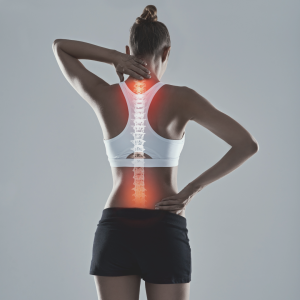
pilates for spine health
Find your centre
The spine needs to move in certain planes in certain sections to maintain its health and function as we journey through life.
From the tailbone (coccyx) to the base of the skull (occiput) each bony segment, or vertebra has particular movement potential and sequencing capacity that enables easeful, graceful, strong, and supported movement of the whole body when we move ‘well’ (using full range of motion potential).
Yet we tend to move in certain ways repetitively, we learn to consciously and subconsciously take short cuts, and develop postural adaptations that can make full range of motion difficult to maintain. There is definitely a ‘use if or lose it’ component to spinal health as neuromuscular patterns that are well used begin to dominate, our habits become instinctual and our spines begin to evolve into different shapes!
We tend to notice this when certain things become difficult, effortful, or painful:
- recurrent neck and shoulder pain
- lower back pain
- limited movement
- pelvic floor dysfunction
Jane offers one-to-one pilates to help you address each of these, and more, through postural assessment, pelvic floor and diaphragmatic function evaluation, and simple, accessible personalised movement and exercise plans for home-based self care and rehabilitation.
Our spines begin their evolution at just three weeks gestation, forming the central bony structure that supports our growth and development from embryo to our eventual demise. As we emerge and grow we learn to roll, back bend, crawl, stand, walk, run, and jump – each of which develop neuromuscular pathways that enable easeful movement and functional range.
This all comes from three central axis points along the spine and the way that movement sequences through the spine to the six limbs:
- arms
- legs
- head
- tail
Movement initiation and progression are supported by the muscles of the ‘central cylinder’. Together, the respiratory diaphragm, pelvic floor muscles, transverse, and oblique abdominal muscles, and deep back muscles ‘hold’ the spine as it moves, maintaining length and space that allow strength, stability, and mobility through the whole body.
Pilates helps to to sense, feel and use this core cylinder of support to create integrated movement, reduce and eliminate pain, rehabilitate, recover, and regain easeful movement.